6 Benefits of
lactic acid in skincare
Lactic acid is a naturally occurring, water-soluble alpha hydroxy acid (AHA) which your body produces when it breaks down glucose into a fuel source if your tissues aren't sufficiently oxygenated. It's also found in a range of fermented foods, such as dairy products, pickled vegetables and bread, among others. In skincare, lactic acid is well known for helping to remove dead skin cells and improve skin texture.
Because of this, you'll typically find it in cleansers, exfoliants and serums, which make use of its surface-level exfoliating properties, as well as its hydrating and anti-ageing properties. Lactic acid also helps maintain the slightly acidic pH of your skin, supporting the natural moisture barrier so your skin feels comfortable.
What does lactic acid do
for your skin?

Lactic acid helps remove dead skin cells on the outermost surface of your skin by breaking down the bonds that hold these dead skin cells together. This makes them shed more easily and reveals fresher, new skin cells underneath. Over time, regular exfoliation with lactic acid may give you a smoother complexion and improved skin texture.
Thanks to its humectant properties, lactic acid draws in and holds on to moisture, which helps improve your skin's flexibility and softness. It can also help support the skin's natural moisture barrier together with ceramides, which further improves moisture retention, making it a good option if you have dehydrated skin.
Your skin tone is usually called uneven if there are patches of hyperpigmentation, dark spots or redness. All of these are completely natural and nothing you need to worry about (if you're unsure, don't hesitate to consult a doctor), but their appearance might be reduced through regular use of lactic acid. This is partly due to lactic acid's exfoliating properties, and may also be linked to the fact that it could help reduce the production of melanin, which is responsible for skin pigmentation.
Collagen is an important component of your skin, helping it stay elastic and firm. As you age, collagen production usually slows down, leading to the natural appearance of fine lines and wrinkles. Additionally, lactic acid’s exfoliating properties can support the regeneration of new skin cells and help increase the production of collagen and elastin, which can leave your skin looking fuller and more plump.

The exfoliating properties of lactic acid can also help increase the penetration of your other skincare products. When dead skin cells build up, they can form a barrier that prevents products from working properly, so removing them can allow actives to reach deeper and give you more effective results.
Lactic acid may help ease some symptoms of acne. Its exfoliating properties can help lift away dead skin cells that might otherwise clog pores and lead to breakouts.
Lactic acid for skin:
Uses and application
Lactic acid is available in a wide range of skincare products that make use of its multiple benefits. At lower concentrations, you'll often find it in cleansers, toners and moisturisers, while higher concentrations may be reserved for targeted active products such as serums.
It's best not to use high concentrations of lactic acid too often. Excessive use could cause over-exfoliation, which may disrupt your skin's natural barrier. Always check the product label so you know the recommended frequency of use. For example, the NIVEA Derma Skin Clear Scrub, whose skin tolerance has been dermatologically tested, is recommended 2 to 3 times a week.
Whenever you do use high concentrations of lactic acid, make sure you apply sunscreen to any treated areas afterwards. The same goes for any kind of chemical exfoliant, as these will typically increase your skin's sensitivity to the sun. It's a good idea to build a simple everyday habit of applying SPF after you finish your morning skincare routine.
The NIVEA SUN UV Face Specialist Triple Protect Sun Fluid SPF 50+ is ideal if you're looking to add an effective SPF to your routine. Its light formula is sweat-resistant, works well under make-up and absorbs quickly for an invisible finish.

- Pregnancy:
A woman's skin may become more sensitive and reactive during pregnancy because of hormonal changes. Lactic acid is generally considered safe for topical use – however, if you're pregnant you should still be cautious and check with a dermatologist before using products containing higher concentrations of lactic acid. In any case, always read the instructions on the pack carefully before you use a product.
- Veganism:
Lactic acid can be obtained from a variety of sources, including plants and animals. Vegan alternatives to conventional skincare products often use plant-derived lactic acid, so that ethical and environmental considerations are taken into account. If you're unsure whether a specific ingredient in your chosen product is plant-derived or not, it's best to contact the manufacturer. The NIVEA Derma Skin Clear Scrub – along with all the other products in the Derma Skin Clear range – is suitable for vegans.
- Sensitivity:
Even though lactic acid is considered one of the milder AHAs, using it in higher concentrations may cause skin sensitivity for you if your skin tends to react easily. You can be reassured that NIVEA products go through rigorous dermatological testing to ensure they're safe for your skin.
Lactic acid in skincare
Lactic acid is a naturally occurring, water-soluble alpha hydroxy acid (AHA) found in fermented foods. It's also produced by your body when it needs more energy and has limited oxygen available, by breaking down glucose.
In skincare, lactic acid is known for its ability to remove dead skin cells, improve skin texture and help maintain your skin's natural moisture barrier. Lactic acid is commonly used in cleansers, exfoliants and serums, where it mainly works on the skin's surface to exfoliate dead skin cells while helping your skin stay pH-balanced.
The NIVEA Derma Skin Clear range offers effective cleansing products – in particular, the Anti-Blemish Scrub also contains lactic acid to help you build a well-rounded skincare routine.
Building an effective
cleansing routine
Lactic acid is often found in cleansers, toners and serums that use its humectant and exfoliant properties. But when you're trying to build an effective routine, where do you start? Below is a simple routine we recommend, including products from the NIVEA Derma Skin Clear range, which is formulated specially for blemish-prone skin.
- Cleanse
Begin your routine with an effective cleanser. The NIVEA Derma Skin Clear Wash Gel gently removes make-up and impurities and cleans deep inside pores to help prevent blemishes from appearing. After dampening your face, gently massage in the cleanser, avoiding the eye area, and then rinse off with warm water.
- Scrub
To go one step beyond regular cleansing and further refine your skin, occasionally switch your cleanser for a scrub such as the NIVEA Derma Skin Clear Anti-Blemish Scrub. It's formulated with salicylic acid and niacinamide, and also contains lactic acid. Using this scrub can help reduce blackheads and whiteheads without drying out your skin.
- Tone
Round off the cleansing stage of your routine by applying a gentle salicylic acid toner. The NIVEA Derma Skin Clear Toner can help rebalance your skin’s natural pH level, control oiliness and hydrate your skin without clogging pores.
- Exfoliate
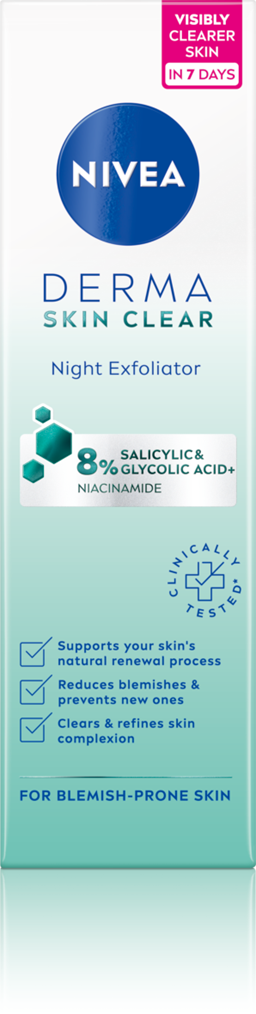
In your night routine, apply a concentrated exfoliator to encourage the renewal of old, damaged skin cells and further clear out pores. The NIVEA Derma Skin Clear Chemical Exfoliator is formulated with salicylic acid, niacinamide and glycolic acid to visibly reduce blemishes. Leave it on overnight for the best results.
Lactic acid benefits for skin:
Takeaway
Lactic acid is a naturally occurring alpha hydroxy acid (AHA) that your body produces when it breaks down glucose molecules for energy. Regular use of lactic acid can support exfoliation and cell turnover, hydration and moisture retention, while also helping to balance skin tone and stimulate collagen production. If you follow a vegan lifestyle, non-animal, plant-derived lactic acid alternatives are available in many products. When you include lactic acid in a well-rounded skincare routine, it may help your skin texture and tone look visibly smoother and more even over time.
FAQs