How to Get Rid of
Sebaceous Filaments
What are
sebaceous filaments?
Sebaceous filaments are small compositions of sebum and dead skin cells that form a cylindrical structure around each hair follicle. These compositions line the inside of pores and help to channel sebum to the skin's surface in order to help maintain healthy moisture levels. They're typically found on the nose, but also in other areas of the T-zone - such as the cheeks, nose and on the forehead.
Sebaceous filaments, which can be dark, yellow or brown in colour, are harmless, completely natural and present on all skin types. However, their appearance can be exaggerated by a range of factors that may make them look similar to, and eventually form into blackheads.
The overproduction of sebum can enlarge the pores and consequently make sebaceous filaments appear more visible, making this more likely for those who have oily skin. Other factors that may contribute to enlarged pores include: genetics, having thicker hair follicles, age, and sun exposure.
Regardless of whether your sebaceous filaments are more noticeable, it's important to remember that their visibility is not a direct reflection of your skin's cleanliness. There's no need to feel alarmed if yours are more noticeable.

Sebaceous filaments are often confused for blackheads because they look similar in appearance - and blackheads can indeed result from insufficient cleansing. But what exactly is the difference between blackheads and sebaceous filaments?
Sebaceous filaments vs blackheads:
what's the difference?
To illustrate the difference between blackheads and sebaceous filaments we can think of the two as a motorway and a traffic jam. The sebaceous filament provides the route/motorway for sebum, dirt and dead skin cells to reach the skin's surface. If there's too much of this, things begin to get stuck and form a traffic jam - or in this case, a blackhead.
Visually speaking, blackheads appear slightly raised above the pore and have a plug at the surface which turns black after oxidising with the air. They're also noticeably wider than sebaceous filaments, which are typically only pin-sized and level with the skin's surface.
One of the key differences, however, being that blackheads can be prevented and removed with the help of an effective face cleansing and skincare regimen. Whereas, this isn't possible with sebaceous filaments - but, why's that?
Sebaceous filament removal not possible?
Here's why…

Simply put - they're a vital component of your skin. While at times they may look unsightly, it's important to remember that they serve an important function in maintaining your skin's moisture levels.
It's best to completely avoid attempting to remove them. Doing so may produce a yellow-ish strand of sebum, but it may also risk drying out or scarring the surrounding skin, and spreading bacteria into nearby pores, which may lead to breakouts.
If you're wondering how to get rid of sebaceous filaments, read on to discover ways to minimise their appearance.
How to minimise
sebaceous filaments


Step-by-step cleansing routine to minimise the
appearance of sebaceous filaments

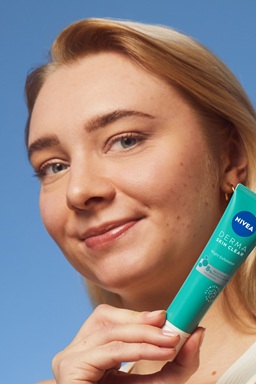
- To start, deeply cleanse any built-up oil and dirt that may be lingering in the pores. The NIVEA Derma Skin Clear Wash Gel combines Salicylic Acid with Niacinamide to clean deep into the pores and leave surrounding skin moisturised to help prevent excess sebum production.
- Next, clarify the skin with a nourishing mask. This will help to remove any remaining impurities and promote a glowing complexion. The NIVEA Pore Purifying 3-in-1 Wash Scrub Mask is ideal as it's enriched with Magnolia Extract and Kaolin to cleanse deeply and leave skin looking refined. If your skin is prone to feeling dry, opt instead for the NIVEA Derma Skin Clear Anti-Blemish Scrub, which can be used 2-3 times a week to deliver the same pore-unclogging effect while delivering unbeatable moisture.
- It's a good idea to incorporate an exfoliation into your night care routine at least once per week. This will help to support your skin's natural renewal process and maintain a refined complexion. The NIVEA Derma Skin Clear Chemical Exfoliator is suitable for daily use and works best when left overnight. Its vegan formula contains 8% Salicylic Acid, Glycolic Acid and Niacinamide to stimulate skin cell turnover and visibly reduce the appearance of blemishes in just seven days.
- Start to round off your routine with an application of toner. Toner helps to keep the skin hydrated and balance its naturally-acidic pH level, which helps to lock in moisture and repel bacteria. The NIVEA Derma Skin Clear Toner uses Salicylic Acid to control oiliness and can contribute to visible skin improvement in just 7 days. The ideal choice for those looking to rebalance and hydrate their skin without clogging pores.
- Then move onto your care routine of serums, eye creams, and finish off by applying a layer of your preferred moisturising cream.
- For those of you with oily and blemish-prone skin, opt for a thinner mattifying cream if possible. And, of course, when doing your morning skincare routine, be sure to apply SPF - after all, limiting sun exposure is an easy way to help prevent pores from becoming enlarged.
The NIVEA Derma Skin Clear Toner uses Salicylic Acid to control oiliness and can contribute to visible skin improvement in just 7 days.

NIVEA derma skin clear
range
Be sure to discover the new NIVEA Derma Skin Clear range, formulated specifically to achieve clearer, more refined skin.
As always, consult a dermatologist before trying any new skincare product, and always follow the instructions on the packaging.